

Plataforma SaaS B2B para visualización arquitectónica y colaboración

Transformé un MVP fragmentado en una plataforma SaaS escalable y lista para la empresa utilizada globalmente por equipos de AEC.
Rol
Lead Product Designer" a "Senior Product Designer (UX/UI) · Proyecto
Empresa
SENTIO VR
Duración
8 años (Etapas del proyecto)
Equipo
Dispositivos
Web · Móvil · Tableta · Escritorio · VR
Herramientas y metodología
Figma · Adobe XD · Illustrator · Miro · Notion · Slack
Impacto de un vistazo
-
Reducción del 30% en el tiempo de incorporación
-
Aumento de NPS de +38 (calificación de 3,2 → 4,5)
-
Más de 8.000 usuarios en más de 15 países
-
Más de 150 componentes reutilizables en el sistema de diseño
Equipo de producto de 5 personas (CEO, CTO, 3 ingenieros)
Impacto comprobado
30%
Tiempo de incorporación
+38NPS
Finalización de tareas
8.000+
Usuario impactados
150+
Componentes
Design System
CONTEXT & CHALLENGE
ENTIO comenzó como un MVP técnicamente funcional, pero carecía de claridad estructural, consistencia en UX y escalabilidad para su adopción enterprise.
La experiencia en Web, Mobile y VR se sentía fragmentada. La navegación era poco clara, el onboarding lento y las demos con clientes carecían de solidez.
El desafío: transformar un prototipo funcional en un producto SaaS unificado, escalable y listo para el mercado enterprise.
MI ROL
Lideré el diseño integral de productos durante 8 años, desde el descubrimiento hasta la entrega. Definí la arquitectura de la información, construí un sistema de diseño escalable y diseñé en cinco plataformas simultáneamente.
Antes
Después
.png)
EL PROBLEMA
Desafíos del usuario
❌ Carga y organización de contenido 3D/360 de fricción
❌ Navegación confusa entre flujos de trabajo
❌ Sobrecarga cognitiva cambiando contextos
Desafíos empresariales
❌ Al MVP le faltaba madurez visual y estructural
❌ UX inconsistente, escalabilidad limitada
❌ Reducción de la confianza durante las demostraciones de los clientes
“Me pierdo tratando de encontrar dónde cargar o editar mi contenido 360”.
Sesión de prueba de usuario
“Son demasiados pasos para organizar un proyecto sencillo”.
Sesión de prueba de usuario
Funciona, pero no es intuitivo. No estoy seguro de dónde estoy en el proceso de trabajo.
Observación de la demostración del cliente

LA SOLUCIÓN
Transformé el MVP en una plataforma SaaS de nivel empresarial mediante:
- Rediseño de los flujos de trabajo principales (cargar, organizar, previsualizar, publicar)
- Creación de una arquitectura de información unificada en todas las plataformas
- Construcción de un sistema de diseño de más de 150 componentes
- Realización de pruebas de usuario iterativas con más de 50 usuarios

Rediseño de la plataforma central en todos los flujos de trabajo clave.

Flujo de trabajo sin interrupciones entre la plataforma web y la aplicación de realidad virtual.
INVESTIGACIÓN Y DESCUBRIMIENTO
Entendiendo el Problema
Métodos
-
15 entrevistas a usuarios (profesionales AEC)
-
Análisis de más de 150 tickets de soporte
-
5 observaciones de flujos de trabajo en vivo
-
Auditoría competitiva (Matterport, Kuula, IrisVR)
Hallazgos Clave
Navegación
-
El 65% no lograba encontrar las funciones principales.
-
Los usuarios percibían cada plataforma como un "producto diferente."
Flujo de Carga
-
Tasa de abandono del 40%.
-
La terminología técnica generaba fricción.
Uso Multiplataforma
-
8 de cada 10 usuarios tenían dificultades al cambiar de contexto.
-
Las inconsistencias en la terminología aumentaban los errores.
Insight Central:
-
Los usuarios no necesitaban más funciones.
-
Necesitaban claridad estructural y consistencia.

Oportunidad identificada:
SENTIO podría ser el primero en ofrecer una experiencia perfecta en la web, dispositivos móviles y realidad virtual.

PROCESO Y ENFOQUE
Fase 1 — Arquitectura de la información
-
Clasificación de tarjetas realizada
-
Se probaron 3 modelos estructurales
-
Estructura jerárquica seleccionada:
Proyectos → Escenas → Objetos → Acciones
Resultado: IA única traducida a la Web, dispositivos móviles y VR.
.jpg)
Fase 2: Simplificación del flujo de trabajo principal
Se rediseñaron 5 flujos de trabajo principales:
• Cargar e importar
• Organización del contenido
• Edición de escenas
• Vista previa
• Publicaciones
Subida reducida de 8 pasos → 3 pasos
Abandono reducido del 40% al 12%
Antes: flujo de carga de 8 pasos
40% de abandono
Tiempo promedio: 8 min
.jpg)
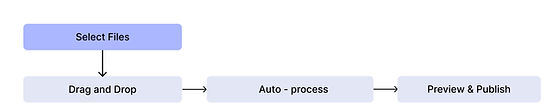
Después — Flujo inteligente de 3 pasos
12% de abandono
Tiempo promedio: 3,5 min
.jpg)
Fase 3: Experiencia multiplataforma unificada
Estrategia: Mismo modelo mental, interacción optimizada para la plataforma.
• Terminología consistente
• Jerarquía visual compartida
• Interacción específica de la plataforma (tacto, mirada, teclado)
Resultado: los usuarios aprendieron una vez y operaron con confianza en diferentes contextos.

Web
Teclado y control de precisión
VR
Interacción espacial
Móvil
Optimizado para el tacto
DECISIONES CLAVE DE DISEÑO
1. Arquitectura de información unificada
Problema:
Las plataformas se sintieron desconectadas.
Decisión:
Jerarquía estructural única en todos los dispositivos.
Impacto:
• Navegación un 30% más rápida
• 65% menos de tickets de soporte relacionados con la navegación
2. Flujo de carga simplificado
Problema:
La carga técnica de 8 pasos provocó un 40% de abandono.
Decisión:
Flujo inteligente de 3 pasos con automatización y retroalimentación clara.
Impacto:
• 40% → 12% de abandono
• Tiempo de carga reducido en un 50%
DESIGN SYSTEM
A medida que el producto fue escalando, las inconsistencias ralentizaron el desarrollo.
Construí un sistema de diseño unificado que potencia la Web, los dispositivos móviles, el escritorio y la realidad virtual.
Incluye:
• Fichas fundamentales (color, tipografía, espaciado)
• Más de 150 componentes reutilizables
• Componentes espaciales de VR
• Documentación de uso para diseño e ingeniería
Impacto:
• Ciclo de diseño a desarrollo un 35 % más rápido
• Aumento del 40% en la velocidad de ingeniería
• Cero inconsistencias en la interfaz de usuario en las nuevas funciones
• 3 productos integrados en el sistema

PRUEBAS Y VALIDACIÓN
Se incorporaron pruebas iterativas a lo largo de todo el proceso.
Pruebas de baja fidelidad
• 8 sesiones moderadas
• IA validada y simplificación de carga
• Se identificó tempranamente la confusión terminológica
Pruebas de alta fidelidad
• 12 pruebas de usabilidad basadas en tareas
• 88% de finalización de carga
Pruebas de realidad virtual
• 10 sesiones presenciales
• 92% de finalización de la experiencia
Pruebas A/B (poslanzamiento)
• Nueva incorporación un 30% más rápida
• El abandono de carga se redujo al 12%
Validación continua mediante análisis, NPS y análisis de soporte.
.jpg)
RESULTADOS E IMPACTO

Experiencia de usuario
• Incorporación: 45 min → 31 min
• Abandono de subidas: 40% → 12%
• Tasa de finalización de VR del 92%

Impacto empresarial
• Más de 8000 usuarios en todo el mundo
• Posicionamiento de nivel empresarial
• Más de 150 demostraciones exitosas

Impacto del equipo
• Velocidad de ingeniería un 40% más rápida
• Entrega de funciones un 35 % más rápida
• Sistema de diseño compartido entre productos
APRENDIZAJES Y REFLEXIÓN
La claridad estructural escala mejor que la expansión de funciones.
• La coherencia entre plataformas genera confianza en los usuarios.
• Las pruebas de baja fidelidad evitan costosas repeticiones de trabajos.
• Los sistemas de diseño son activos estratégicos, no bibliotecas de UI.
• La alineación multifuncional es fundamental para el crecimiento de SaaS a largo plazo.
Este compromiso con un proyecto a largo plazo dio forma a mi enfoque hacia el diseño de productos escalables y multiplataforma.